Sukau · Bilit · Abai · Sabah, Malaysian Borneo
The Kinabatangan. Where the wildlife comes to the water.
Sabah's longest river, 560 kilometres from the interior hills to the Sulu Sea — and its lower floodplain is the most dependable place in Borneo to see wildlife without trekking for it. You sit in a small boat at dawn or dusk, the guide cuts the engine, and the forest comes to the bank.
Updated August 2026 · prices, transfers and cruise times checked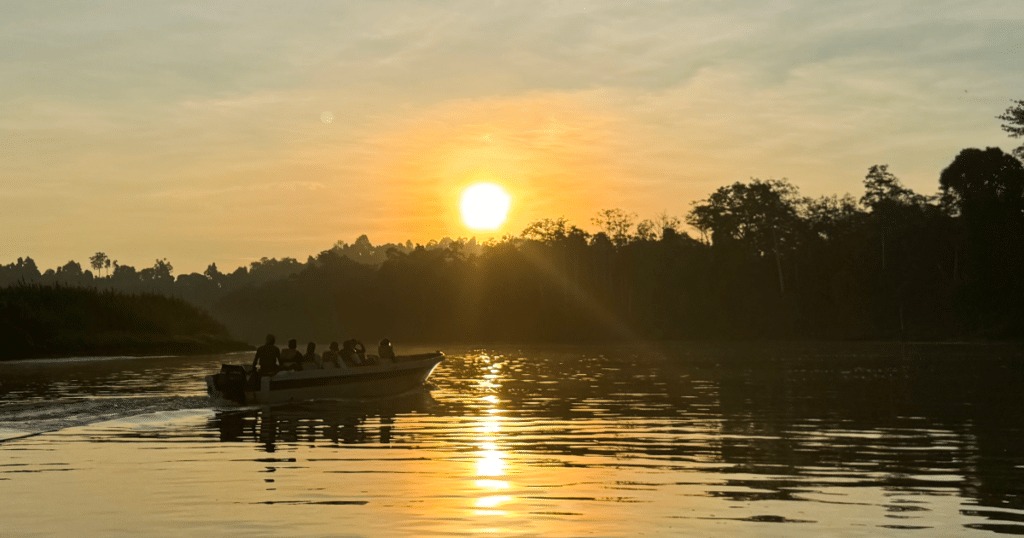
What the river is
Exceptional sightings, complicated reasons
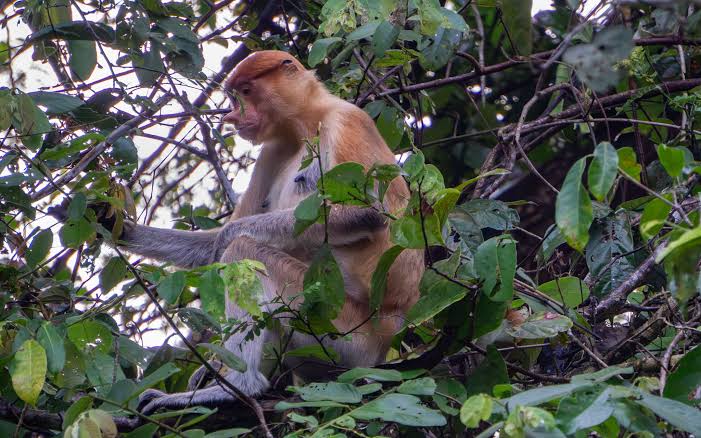
Proboscis monkeys crashing through the trees, hornbills crossing the river in pairs, macaques, monitor lizards, crocodiles — and, if your timing is right, wild orangutans and Bornean pygmy elephants. All of it watched from a boat, engine off, at the hours the animals choose.
Here is the honest part, which most tour pages skip: the reason the wildlife is so easy to see is that there isn't much forest left. Oil palm plantations press against the protected corridor on both sides, so the animals are concentrated into a ribbon of riverside jungle — the Lower Kinabatangan Wildlife Sanctuary, about 26,000 hectares in ten lots. That makes sightings exceptional and the conservation story complicated. You will see both from the boat.
Most visitors come for two nights as part of the Sepilok & Kinabatangan 3D2N circuit, and that is about right: three river cruises across two days, plus a night activity, covers the core of what the river does.
A day on the river
Every lodge runs this rhythm, because the wildlife sets it- Dawn cruise
The best one. Cool air, mist on the water, primates active, birds everywhere. About two hours.
- The quiet middle
Breakfast, then a long hot lull. The animals sleep through it and so should you. Some lodges add a forest walk or oxbow lake.
- Dusk cruise
Second best. Proboscis harems settle into sleeping trees at the water's edge, at close range.
- Night, optional
Night cruise or night walk: buffy fish owls, kingfishers bright in the torchlight, civets, red crocodile eyes.
What you'll see
The honest odds, species by species
A two-night stay means three or four cruises. Here is what those cruises reliably produce — and what they don't. Any operator who promises more than this is telling you what you want to hear.
Where to base yourself
Sukau, Bilit or Abai — the stretch matters more than the lodge
Sukau is the established hub, two hours by road from Sepilok, sitting opposite the mouth of the Menanggul — a narrow tributary that boats can enter, where many of the best primate and elephant sightings happen. Most lodges are here, from backpacker B&Bs to the lodge that hosted David Attenborough. The trade-off: more lodges means more boats, and in July and August a good sighting can draw an audience.
Bilit is 30 minutes further upriver, where the river narrows and the forest feels closer. Fewer lodges, less traffic, animals often nearer the boat, prices a little lower. If you want the river to feel wilder and don't need a pool, Bilit is the better call.
Abai is downriver toward the mouth, reached by a 1.5–2 hour boat transfer from Sandakan rather than by road — either an inconvenience or the best part, depending on your temperament. Quietest of the three, strongest for birds, and the boat ride in doubles as a wildlife cruise.
The practical summary: first visit, limited time — Sukau. Second visit or crowd-averse — Bilit. Birders and boat romantics — Abai, or split nights between Abai and Sukau. Full comparison: Sukau vs Bilit vs Abai.
When to go
Open all year; pack differently by month
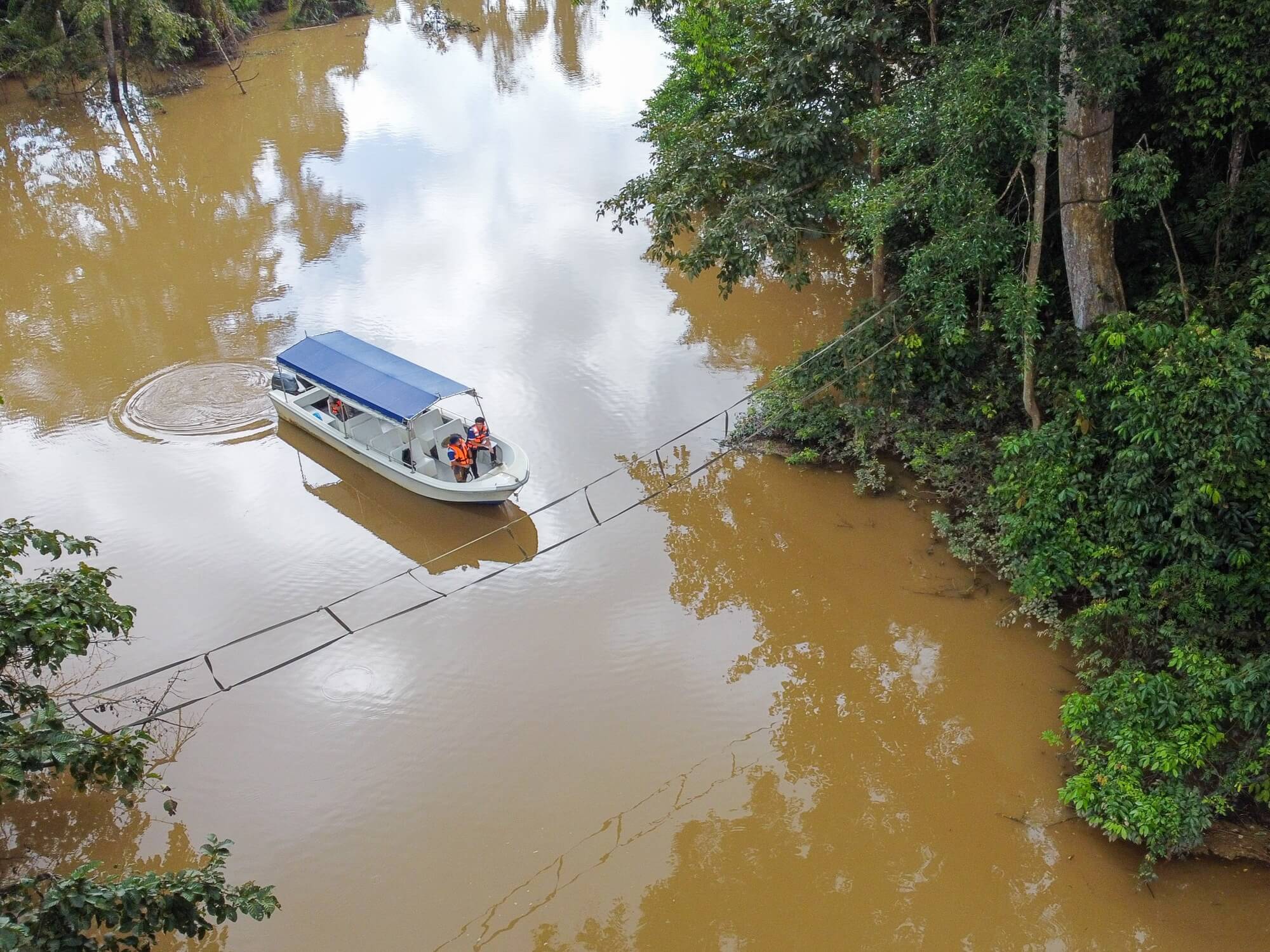
March to October is drier, with easier boardwalks and the peak elephant and fruiting months. November to February brings the northeast monsoon: afternoon downpours, higher water — which lets boats push deeper into flooded forest channels — and noticeably fewer visitors. Cruises run in rain; ponchos are standard lodge kit. There is no month where the river is a bad idea, only months where you should pack differently.
Getting there
Two hours from Sepilok, which is the point
The lower Kinabatangan is 2 to 2.5 hours by road from Sepilok and Sandakan Airport, which is why the two pair so naturally: orangutans and sun bears at close range in Sepilok on day one, then the same species wild from a boat on days two and three. Gomantong Caves sits just off the Sukau road, so a stop costs no extra driving.
Most lodge packages include the transfer from Sepilok or Sandakan. Independent travel is possible — shared taxis to Sukau run from Sandakan — but awkward, because the lodges sell cruises as packages and walk-in rates rarely beat them.
What it costs
2026/27 package prices, per person twin share
Including lodge, meals, transfers and the scheduled river cruises. Entrance fees are included; the RM10-per-room-per-night tourism tax usually isn't, and at some lodges the night cruise (about RM116) and night walk (about RM59) are add-ons rather than inclusions — ask before you book, not after.
Kinabatangan only
from RM780
2D1N at a simple riverside lodge; 3D2N from about RM880. Two nights is the better buy — one night means only two cruises.
Sepilok + Kinabatangan 3D2N
from RM1,080
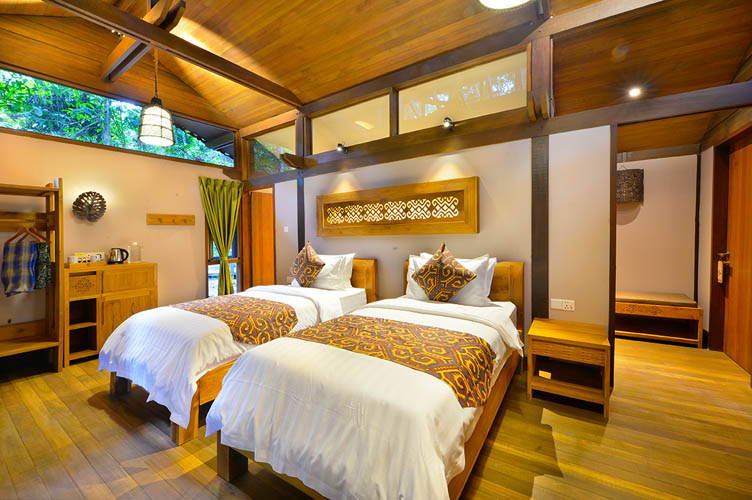
The classic circuit. About RM1,900 at a mid-range Sukau lodge with air-conditioned deluxe rooms and an oxbow cruise; RM2,100–2,200 for the Abai boat-access lodges. Children 2–10 pay about 25% less.
Longer circuits
from RM2,450
4D3N adding Selingan Turtle Island; a 5D4N split between Abai and Sukau from about RM3,110.
Top end
RM2,500+
Sukau Rainforest Lodge and its rivals, typically for two nights alone, with better boats and guide ratios.
Whatever the tier, the guide matters more than the room. A guide who can spot a tarsier at thirty metres in torchlight is the difference between a boat ride and the best wildlife day of your trip.
Kinabatangan FAQ
Questions people ask before they book
Is 2 nights enough on the Kinabatangan?
Yes, for most people. Two nights means three or four cruises plus a night activity, which covers the daily wildlife and gives you two shots at the dawn cruise. Add a third night if you're a birder or you've come principally hoping for elephants — more cruises, better odds.
Will I see pygmy elephants?
Maybe. Herds pass through the Sukau–Bilit stretch every few weeks and stay for days when they do. Across a two-night stay the honest odds are perhaps one in four, better June–September. No lodge can guarantee them.
Is the Kinabatangan safe for children?
Yes, with the usual boat rules: life jackets on (lodges carry child sizes — confirm ahead for under-4s), hands inside the boat, and no wandering the riverbank. The cruises are short enough for young attention spans, and the animals are genuinely exciting. Several lodges have family rooms, and children aged 2–10 usually pay about a quarter less on packages; ask before booking rather than after.
Can you swim in the river?
No. Estuarine crocodiles live in it, large ones. Lodges are raised on stilts and boardwalks for the flood season, not for atmosphere.
Kinabatangan or Danum Valley?
Different propositions. The Kinabatangan is wildlife density from a boat, easy logistics, and modest prices, with plantations at the edge of the frame. Danum Valley is vast primary rainforest, harder walking, roughly double the cost, and the wildlife is sparser but wilder — the full comparison is here. Do the Kinabatangan on your first Borneo trip; do Danum when the river has ruined you for ordinary holidays.
What should I pack?
Neutral-coloured clothing, a rain shell or poncho, binoculars (one pair per person, not per couple — this is the most common regret), insect repellent, a head torch for night walks, and dry bags for phones and cameras on the boat — the full packing guide covers the rest.