
4,294 hectares · gazetted 1931 · Important Bird Area
Kabili-Sepilok Forest Reserve
Updated August 2026
The forest behind everything else in Sepilok. Forty-three square kilometres of lowland dipterocarp rainforest and coastal mangrove, protected since 1931, home to the free-ranging orangutans, the wild sun bears, the hornbills and the 800-year-old trees. The orangutan centre, the sun bear centre and the RDC all sit on its edge; this page is about the reserve itself, its history, its wildlife, and how to walk into it.
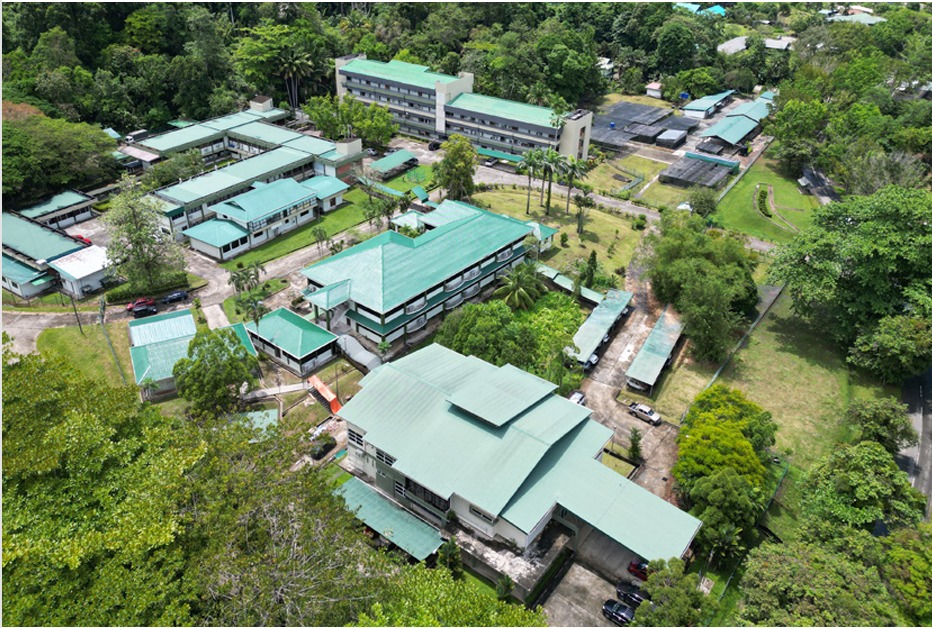
Kabili-Sepilok Forest Reserve (often just "Sepilok Forest Reserve" or "Sepilok Nature Reserve") covers 4,294 hectares between the Sandakan–Kota Kinabalu highway and Sandakan Bay, 25 km west of Sandakan. It was gazetted as a forest reserve by the British North Borneo administration in 1931, which makes it one of the oldest protected areas in Malaysian Borneo and one of the very few patches of primary lowland rainforest on the Sandakan peninsula that was never logged or planted. It is managed by the Sabah Forestry Department; the Sabah Wildlife Department runs the orangutan centre within it.
What's in the reserve
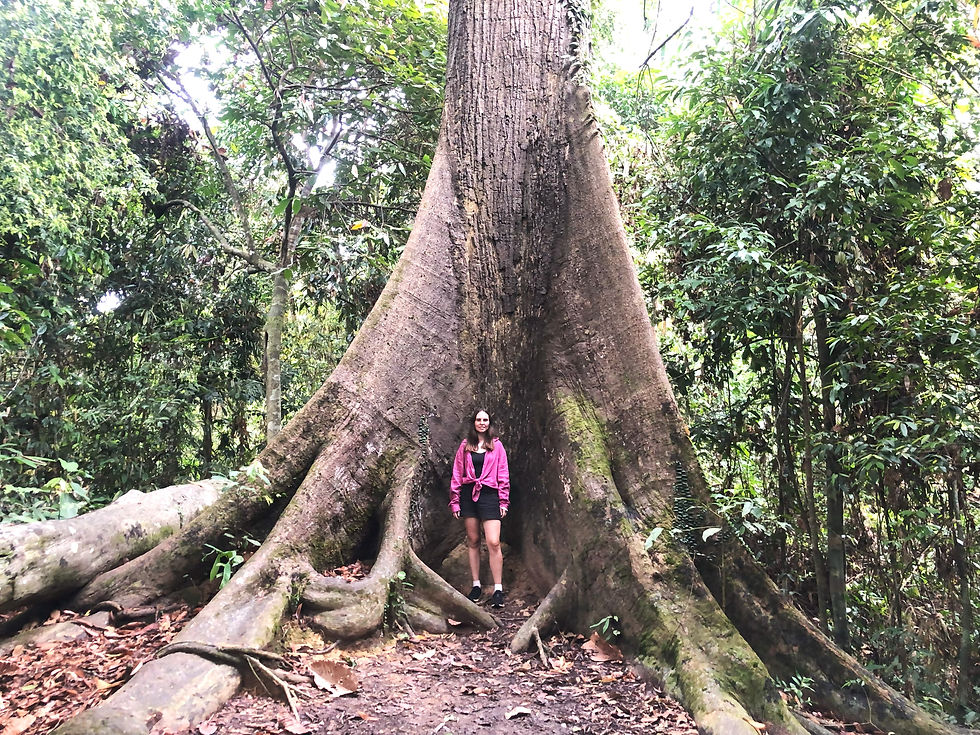
Roughly half the reserve is lowland mixed dipterocarp forest on gentle hills, the classic Bornean rainforest of giant emergents, buttressed trunks and a canopy 40 to 60 metres up. Towards the coast it grades through freshwater swamp into mangrove on Sandakan Bay. That range of habitats in a small area is why the bird list is so long (over 300 species) and why it was designated an Important Bird Area by BirdLife International in 2009. Named trees include the Sepilok Giant, a yellow seraya estimated at 800 to 1,000 years old and 65 metres tall, and menggaris (tualang) trees with their pale trunks rising clear above the canopy, often with wild bee combs hanging beneath the branches.
Wildlife
The reserve is the home range of the 60 to 80 rehabilitated orangutans released from the centre, and a resident wild population; you may meet one on the RDC walkway or see a nest from the towers. Wild sun bears are present but rarely seen; their claw marks are on the trees. Bornean gibbons call at dawn, red leaf monkeys, long-tailed and pig-tailed macaques are common, and Bornean pygmy elephants pass through from time to time, as do clouded leopards, though you won't see either. At night: red giant flying squirrels, slow loris, Western tarsier, civets, mouse deer, and a long list of frogs and invertebrates. The mangrove holds proboscis monkeys, otters and estuarine crocodiles. For what you'll actually see, see what you'll actually see in the reserve.
Birds are the draw for specialists. Bornean bristlehead is the headline endemic; add rhinoceros, black, bushy-crested and oriental pied hornbills, black-and-crimson, blue-headed and giant pittas, crested jay, broadbills, trogons, malkohas, kingfishers and a rotating cast of migrants from September to March. The annual Borneo Bird Festival is held at the RDC.
Walking in the reserve
Public access is through the Rainforest Discovery Centre (trails, lake loop, canopy walkway, night walk) and the short boardwalk at the orangutan centre. Beyond that, the Kabili Trail runs from the RDC deep into the reserve towards the Kabili mangrove, about 20 km return with three shelters; it requires a Forest Reserve Entry Permit from the RDC ticket office, several litres of water, leech socks in the wet season, and ideally a guide (arranged at the RDC, around RM100). It's a full day and a genuine jungle walk rather than a stroll. The orangutan centre's own forest trails, which once ran from the boardwalk, are closed to the public.
History in brief
- 1931 Gazetted as Kabili-Sepilok Forest Reserve by the British North Borneo Chartered Company, for research and protection rather than timber.
- 1950s Forest Research Centre established at Sepilok; Agnes and Harry Keith, Sabah's first Conservator of Forests, are part of the story that leads to the orangutan centre.
- 1964 Sepilok Orangutan Rehabilitation Centre opens under Barbara Harrisson, the first in the world.
- 1996 Rainforest Discovery Centre opens for environmental education; public access from 2006.
- 2008 Bornean Sun Bear Conservation Centre founded; public opening 2014.
- 2009 Designated an Important Bird Area by BirdLife International.
Practicalities
There's no entrance fee for the reserve as such; you pay at whichever centre you enter through. The reserve road from the highway junction runs past the resorts to the centres and dead-ends at the RDC, so everything is walkable if you're staying in Sepilok. Weather is equatorial: hot, humid, a shower most afternoons, heavier November to February. Wear closed shoes and long trousers, carry water and repellent, and don't feed or approach the macaques. For getting to the reserve at all, see how to get to Sepilok; for where to sleep on its edge, where to stay.
Frequently asked
Is Sepilok a national park?
No. It's a state forest reserve (Class VI, virgin jungle reserve) managed by the Sabah Forestry Department, which is why access is through the centres rather than a park gate.
Can I see wild orangutans in the reserve?
Possibly. The released and wild animals range through it; the RDC canopy walkway and the fruit trees around the resorts are where chance encounters happen. The centre's feeding platform is the reliable view.
How big is Sepilok Forest Reserve?
4,294 hectares, about 43 square kilometres, roughly 10,600 acres.
Plan your Sepilok trip
Get a Sepilok itinerary and price within one working day
Tell us your dates, where you're flying from and who's coming. You'll receive a day-by-day itinerary, a price, and our Sepilok & Kinabatangan planning PDF. No obligation, no payment until you confirm.
- Operated by a licensed Sabah tour operator
- English-speaking Sabahan guides
- Private departures; no fixed group dates
- Flights, Kinabatangan, Gomantong and Turtle Islands all bookable in one itinerary