Ethics & conservation · Sepilok, Sabah
Is visiting Sepilok ethical? An honest answer.
It's the right question, and the fact that you're asking it means the wildlife-tourism industry has earned its reputation. Plenty of places that call themselves sanctuaries are wildlife entertainment with better fonts. So let's take the question seriously: what Sepilok actually does, what your ticket funds, where the genuine discomfort lies — and how to tell a real rehabilitation centre from a photo opportunity anywhere in Southeast Asia.
Updated August 2026 · a guide with opinions, clearly labelled as such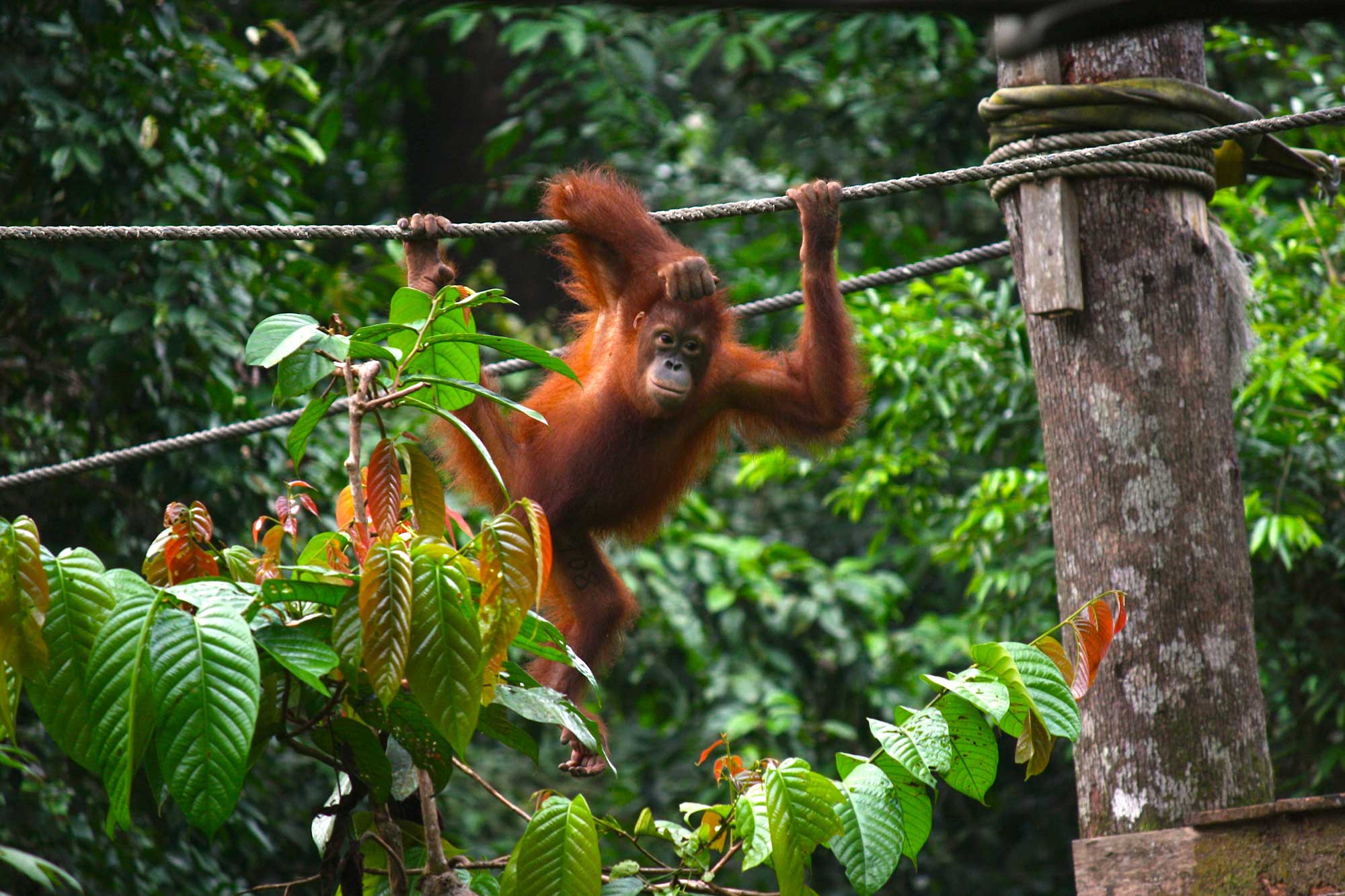
The short answer
Yes — because it's designed to disappoint you
Sepilok has been rehabilitating orphaned and displaced orangutans since 1964, under the Sabah Wildlife Department, in a 43-square-kilometre protected reserve. Its ethics rest on a simple inversion: everything about the visitor experience is arranged for the animals' benefit, not yours. You watch from a distance. You can't touch anything. The food on the platform is deliberately monotonous so the forest is always more interesting. And nobody will promise you an orangutan, because the ones that stop coming are the success stories.
That last point deserves a full stop of its own. At a wildlife show, the animal must appear — its appearance is the product. At Sepilok, the product is the animal's eventual absence. When you understand that, an empty platform stops being bad luck and becomes the best possible news, mildly inconvenient for your camera.
How it actually works
From orphan to forest, over years not weeks
Most arrivals are young orangutans orphaned by habitat clearance or rescued from the illegal pet trade. Rehabilitation is slow, deliberate, and mostly invisible to visitors:
- Stage 1Quarantine & care
Health checks, disease screening and, for infants, round-the-clock care away from public view.
- Stage 2Nursery — forest school
Young orangutans learn climbing, nest-building and foraging on the nursery ropes. This is what you watch from the indoor viewing area.
- Stage 3Free range, backup meals
Older animals range the reserve, returning to the feeding platform only when the forest is lean — twice-daily feedings are the safety net, not the point.
- Stage 4Independence
The goal: animals that ignore the platform entirely, breed, and live wild in the reserve. You will not meet them, which is correct.
The Bornean Sun Bear Conservation Centre across the road, founded by Dr Wong Siew Te in 2008, runs the same logic for the world's smallest bear: rescue, rehabilitate, release where possible — and visitors watch working conservation, not a performance.
The uncomfortable parts
Where the discomfort is real, and worth sitting with
The animals are here because of us. Nearly every orphan at Sepilok traces back to habitat loss — much of it for the palm oil economy that also built the roads you'll drive and employs the communities you'll pass. Your flight here has a footprint too. Visiting doesn't resolve that tension; it makes you look at it, which is more than most holidays ask.
Tourism and rehabilitation are in permanent negotiation. A crowd at a feeding platform is still a crowd, and habituation to humans is exactly what rehabilitation tries to undo. Sepilok manages this with distance, barriers, bag lockers and rules — but the tension doesn't vanish, it's managed. Honest centres admit this; dishonest ones sell it as harmony.
Your health is their risk. Orangutans share roughly 97% of our DNA and catch our respiratory illnesses, sometimes fatally. If you're unwell, the ethical choice is the boring one: skip the visit. The rules about distance and not touching aren't etiquette — they're epidemiology.
And the deepest answer isn't at Sepilok at all. Rehabilitation treats symptoms. The cure is standing forest — which is why the Kinabatangan corridor and reserves like Danum matter more than any centre, and why tourism that gives intact forest an economic value is part of the answer rather than part of the problem.
The field guide
Real sanctuary or photo op: the red flags, anywhere
Use this checklist on any wildlife attraction in Southeast Asia, including this one:
Walk away if…
- You can hold, hug, bathe or take selfies in contact with the animal.
- Sightings are guaranteed, scheduled, or the animal "performs".
- Animals are chained, caged for display, or brought to you.
- Cubs and babies are always available — a supply that implies breeding for tourism.
- The money trail is vague and the "sanctuary" sells encounters by the minute.
Trust builds when…
- Distance is enforced and barriers protect the animals from you, not you from them.
- Staff say "maybe" — no-shows are explained as success, not refunded as failure.
- Fees go to a named authority or NGO with published work (here: Sabah Wildlife Department; the sun bear centre publishes its rescues by name).
- Rules are inconvenient: lockers, no food, no flash, stay on boardwalks, sick visitors asked to stay away.
- The endgame is release or lifelong care — never a show.
Sepilok passes this checklist. That's not loyalty talking — it's the checklist talking, and you're encouraged to run it yourself when you visit.
Visiting well
How to be the good kind of visitor
Come to the feedings on time rather than early-crowding the boardwalk; keep five metres and more whenever an orangutan chooses the boardwalk itself (they have right of way, always); leave every bag, bottle and loose item in the RM1 lockers; no flash, no drones, no food anywhere in the centre. Skip the visit if you're ill. Spend your money where it works: entrance fees, the sun bear centre, a night at a reserve lodge, a river trip that pays guides and boatmen to keep forest worth more standing than cleared. And afterwards, the single highest-impact souvenir: check your shopping for certified sustainable palm oil rather than boycotting it blindly — certified demand protects standards; blanket boycotts just move the market somewhere with none.
Ethics FAQ
The questions people hesitate to ask
Why can't I hold or touch a baby orangutan?
Because every human contact works against the one skill an orphan must learn: living without us. Contact also risks passing human illness to an ape with no immunity to it. Any facility anywhere that lets you hold one is manufacturing dependence for money — it's the single most reliable red flag in wildlife tourism — the short version to share is here.
Isn't the feeding platform just a show with extra steps?
It's a fair challenge. The differences: attendance is voluntary and unreliable, the food is deliberately dull, the platform sits at distance in the forest, and the centre's stated ambition is for animals to stop coming. A show requires the animal; Sepilok's design works toward not requiring it. Watch the staff's reaction to an empty platform — mild satisfaction — and the difference is visible.
Where does my ticket money go?
Orangutan Centre fees go to the Sabah Wildlife Department, which runs the rehabilitation programme; Sun Bear Centre fees fund the BSBCC's rescue and release work directly. Neither is a profit venture. Tour prices additionally pay local guides, drivers and lodges — the economic case for keeping forest standing.
Would it be more ethical not to visit at all?
The honest answer: a well-behaved visitor is a net positive here. Regulated visits fund care, staff and enforcement, and give the forest measurable economic value in a state where the alternative use of land is not hypothetical. The harm case rests on crowding and habituation, which the rules exist to manage — and which you can personally refuse to add to. Not visiting helps nothing; visiting badly helps less than that.
Can I volunteer with the orangutans?
Not hands-on — for the same disease and dependence reasons you can't touch them, and no legitimate programme anywhere offers hands-on orangutan contact to paying volunteers. Structured programmes do exist around enrichment, construction and habitat work through the centres' official partners; apply through the centres' own sites and treat any programme selling ape contact as disqualified by the offer itself.
Should I boycott palm oil?
The uncomfortable consensus among conservation groups working here: no — demand certified sustainable palm oil instead. Palm is the highest-yielding oil crop; boycotting it shifts production to oils needing more land, likely somewhere with weaker rules. Certified demand is leverage. It's a less satisfying answer than a boycott, which is usually the sign it's the real one.