Sandakan · gateway to the wildlife coast
Sandakan: the town everyone flies through, honestly appraised.
Let's be straight about what Sandakan is: a working port town, not a destination — most visitors see only its airport and jetty, and nothing terrible happens to them. But give it half a day and it repays you with three genuinely worthwhile things: a writer's hilltop house with the best view in town, one of the Pacific war's darkest sites handled with unusual grace, and the best cheap seafood on Sabah's east coast. Here's the honest half-day, and permission to skip it if wildlife is all you came for.
Updated August 2026 · the half-day we actually recommend to guests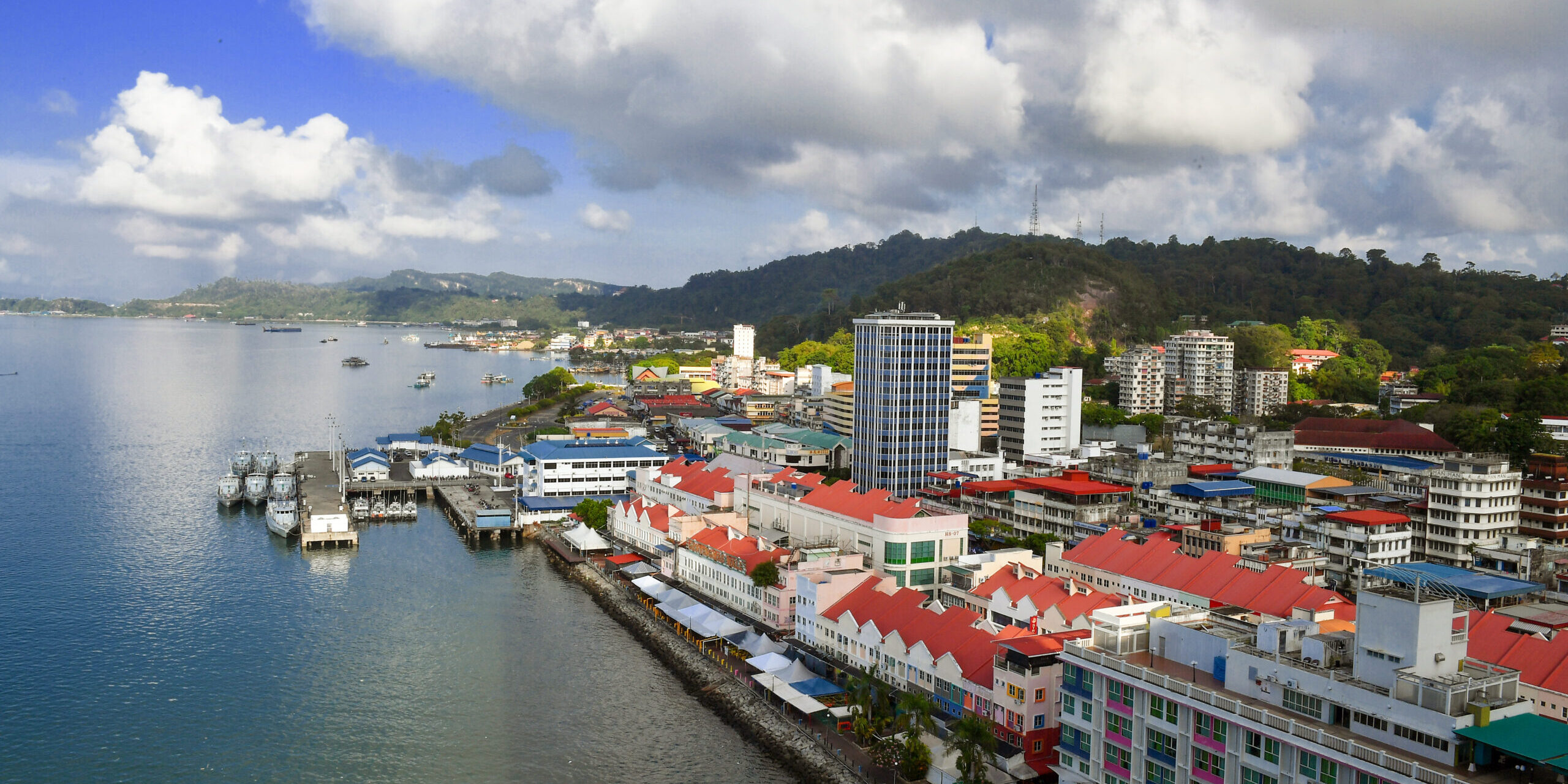
The backstory, briefly
Boomtown, battlefield, gateway
Sandakan was British North Borneo's first capital and, in its timber heyday, a port so rich it was nicknamed "little Hong Kong." The Second World War erased that town almost entirely: occupied, bombed flat, and made the site of the Sandakan POW camp, from which the infamous death marches to Ranau departed in 1945 — of roughly 2,400 Australian and British prisoners held here, six survived the war, all escapees. Rebuilt Sandakan chose commerce over grandeur, which is why the town looks ordinary and reads extraordinary. The history lives at two quiet sites, and both are worth your morning.
The route
The half-day that earns its place
Sandakan in five stops
Walkable core plus two short Grab hops · morning start beats the heat- Sandakan Memorial Park
The POW camp site, now a hushed garden of rain trees with a small, excellent exhibition. Sombre, unmissable, and handled with restraint. 45–60 minutes; a short Grab from town.
- Agnes Keith House & the view
The restored hilltop home of the American author whose "Land Below the Wind" named Sabah's nickname. Colonial-era rooms, her remarkable story (including wartime internment), and the town's best viewpoint next door. The English Tea House beside it does scones on a lawn, if colonial pastiche with a harbour view appeals — it does, admit it.
- The Heritage Trail steps down
The Tangga Seratus (hundred steps) drop you from the hill into town past St Michael's, the granite church that survived the bombs — one of the few pre-war buildings left standing anywhere.
- Central market & waterfront
Ground floor fish theatre, upper floor everything else. Then the waterfront for lunch: this is seafood-at-source pricing, and the town's real attraction for many.
- Sim Sim water village — or the exit
Stilt-house neighbourhoods over the water, now with a small strip of famous breakfast-and-seafood joints on the jetties. Go respectfully — people live here. Then onward: airport, Sepilok, or the jetty, each 20–30 minutes away.
When to skip all of this: if you have exactly the days for the wildlife and not one more. Sepilok's centres, the river and the island outrank the town, and the town would agree. Slot Sandakan in as the buffer half-day around flights or the Selingan boat — which is precisely where Route A puts it.
Sandakan FAQ
The practical questions
Is Sandakan worth staying overnight?
Only when logistics demand it — an early Selingan boat or awkward flight. Given the choice, sleep in Sepilok's forest and visit town; the reserve at dawn beats any town hotel's breakfast. The exception is dinner: town seafood is better and cheaper than anything in the reserve, so an evening run in is a legitimate outing.
Is it safe?
The town itself is an unremarkable, workaday place with normal town sense applying. The broader east-coast advisories some governments maintain relate to the offshore islands toward the Philippine border, not the Sandakan–Sepilok–Kinabatangan corridor tourists actually use; check your own country's current advice and you'll find the tourist circuit sits outside the areas of concern.
What's the death-march history I should know before the Memorial Park?
In 1945, with defeat closing in, the Japanese forced starving POWs on marches from Sandakan to Ranau, 260 kilometres inland; those too weak to walk were killed or left to die, and the camp's remaining prisoners perished. Of about 2,400 held at Sandakan, the war's end found six alive — Australians who had escaped. The park tells this with quiet thoroughness; give it the time and silence it asks for.
Getting around town?
Grab works well and cheaply; the heritage core is walkable in a morning; and the airport, Sepilok and the Sabah Parks jetty are each 20–30 minutes from the centre. Full transport detail lives in getting to Sepilok.