Gomantong Forest Reserve · Lower Kinabatangan · Sabah
Gomantong Caves. The most valuable ceiling in Borneo.
A limestone hill on the Sukau road hides Sabah's largest cave system, where four species of swiftlet build the nests that end up in birds' nest soup, harvesters climb rattan ladders ninety metres into the dark to collect them, and at dusk the bats pour out in a river of their own while hawks pick them off the sky. It is spectacular, it smells, and it is twenty minutes off the road you're already driving.
Updated August 2026 · fees and hours checked with Sabah Tourism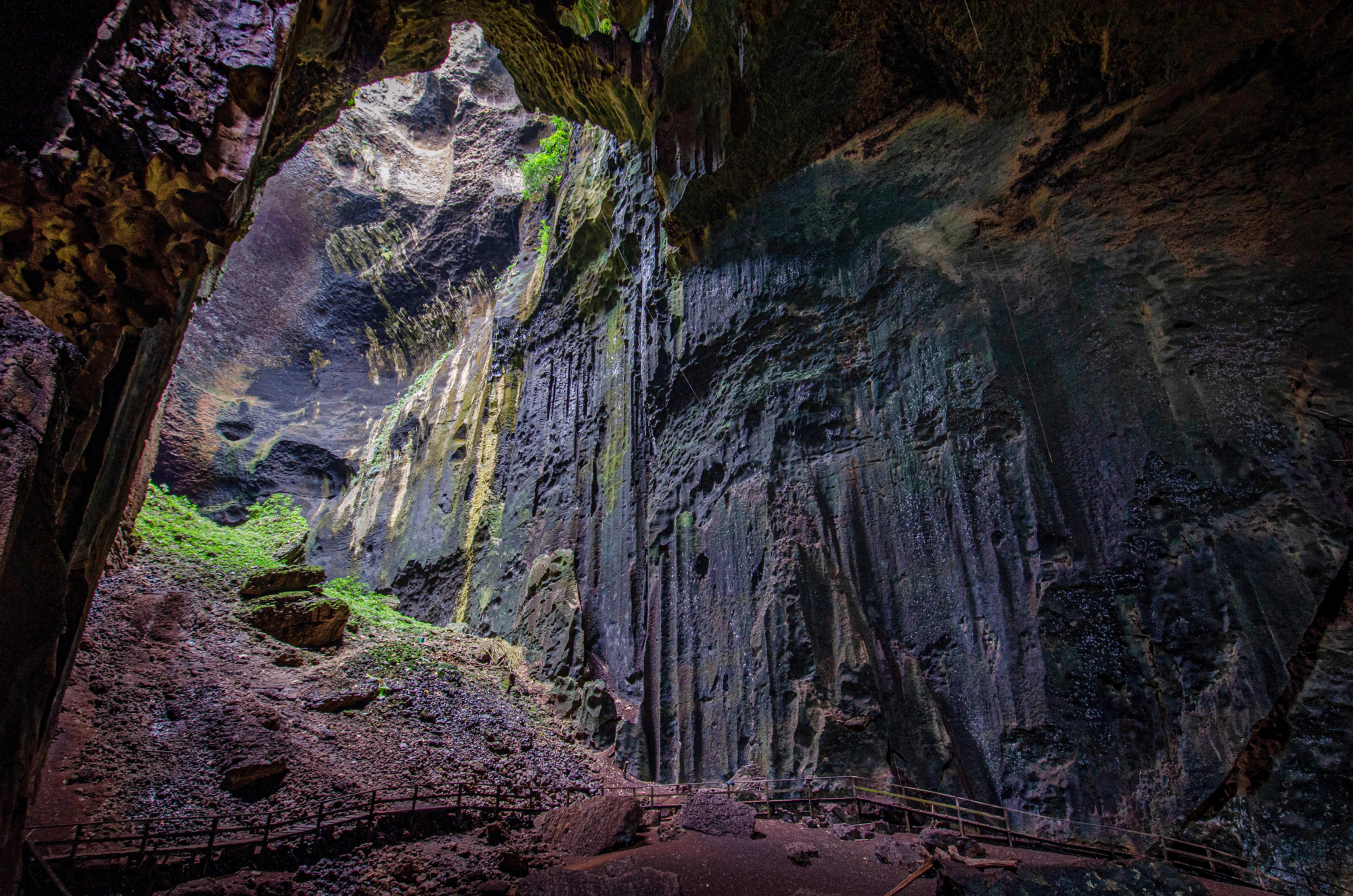
From Sepilok / Sandakan
~1.5–2 h
Just off the Sukau road — a stop costs no extra driving on a Kinabatangan transfer.
Cave open to visitors
Simud Hitam
The Black Nest Cave, on a boardwalk loop. Simud Putih requires climbing and isn't open casually.
Chamber height
90 m
One vast chamber, open to the sky at the top, alive from floor to ceiling.
Bat exodus
Dusk
Wrinkle-lipped bats spiral out around 17:30–18:00, with bat hawks hunting the column.
What Gomantong is
Nineteen caves, one industry, centuries old
The Gomantong hill is the largest limestone outcrop in the lower Kinabatangan, riddled with at least nineteen caves inside a 3,297-hectare virgin forest reserve managed by the Sabah Wildlife Department. Swiftlets have nested here for as long as anyone can document, and their nests — built from hardened saliva — have been harvested and traded for birds' nest soup for centuries. Gomantong remains the most important source of edible nests in Sabah.
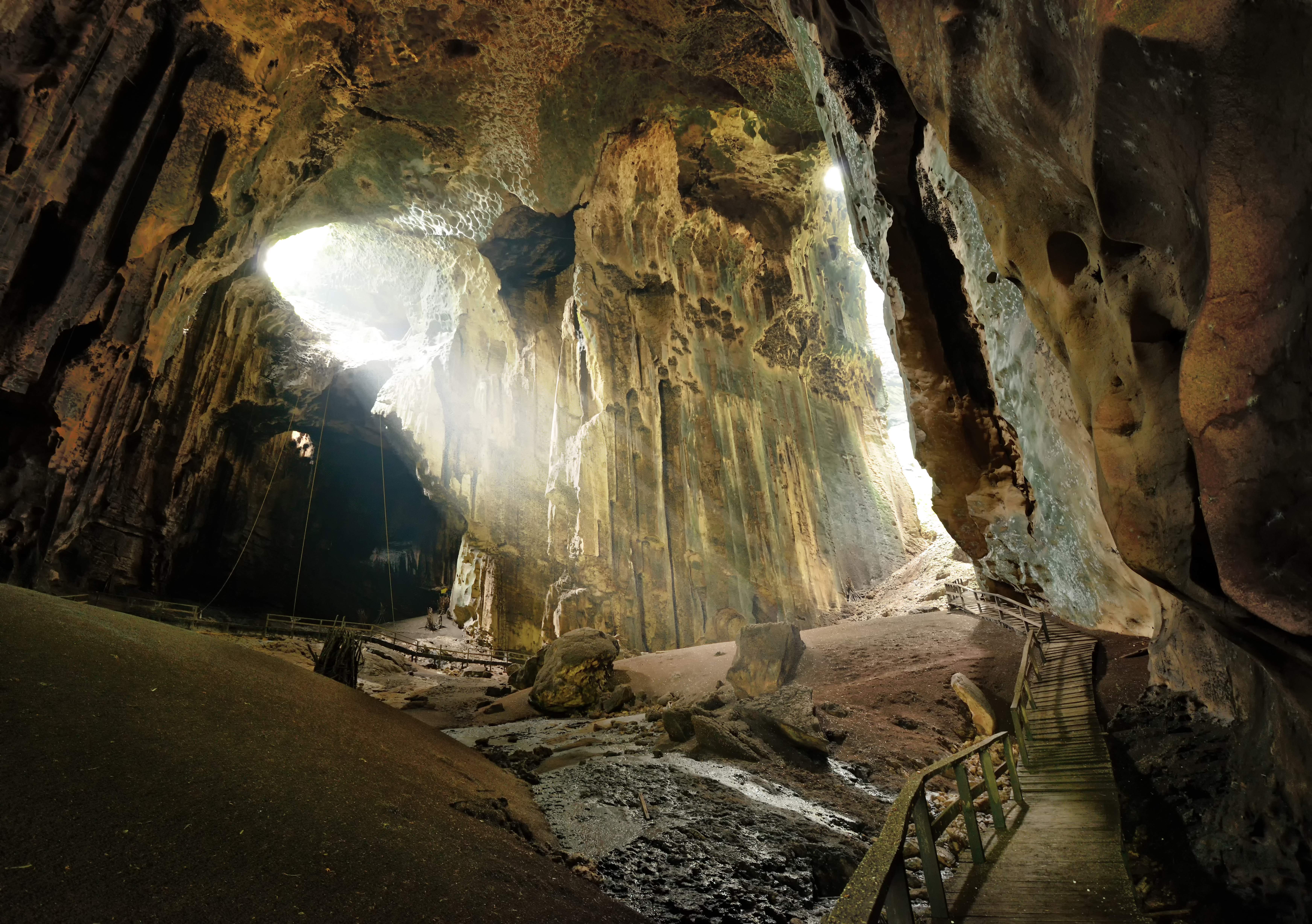
Two main caves do the work. Simud Hitam, the Black Nest Cave, is the one you visit: a ten-minute forest boardwalk from the visitor centre, then a loop inside a single cathedral chamber ninety metres high. Simud Putih, the White Nest Cave, holds the more valuable white nests, sits higher in the hill, and is reached by climbing — it isn't part of a normal visit.
The harvest itself is the astonishing part: collectors work in teams on rattan ladders and ropes rigged to the cave roof, a method that has changed very little in generations. If your timing lands in a harvest season, you may watch it happen.
The harvest calendar
Nests are collected twice a year. Visit in these windows and you may see the ladder teams at work; visit outside them and you'll see more nests on the walls.
Harvest seasonsOpen to visit, no harvest
What a visit is like
Honest warning: the handrail is not for holding
Let's not oversell the comfort. Simud Hitam holds an enormous population of bats and swiftlets, and beneath them a deep, working layer of guano, and on the guano a carpet of cockroaches — plus the beetles, crabs and centipedes that keep the whole system running. The boardwalk lifts you above all of it, but the roaches like the handrails, the smell arrives before the cave does, and things occasionally drop from ninety metres up.
None of which is a reason to skip it. It is the most alive place you will stand in Borneo — a complete ecosystem running at full speed in the dark, and the noise alone (thousands of swiftlets echo-clicking to navigate) is worth the stop. But wear closed shoes, keep your mouth closed when you look up, bring a torch, and leave the sandals and the squeamish relatives at the visitor centre canteen.
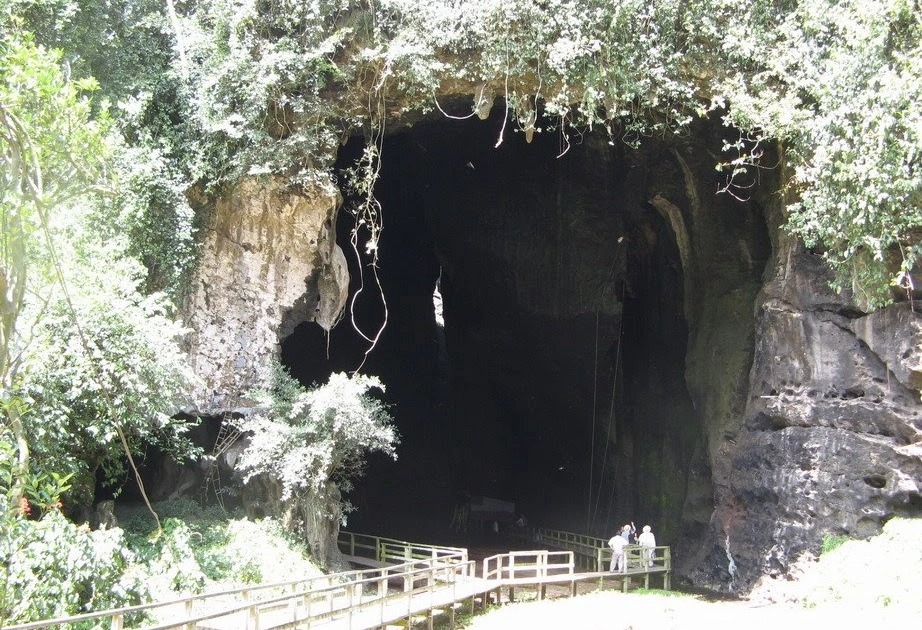
The visit takes 45 minutes to an hour: ten minutes of forest boardwalk each way — watch for red leaf monkeys and the occasional wild orangutan — and a slow loop of the chamber.
The evening show
The bat exodus, and the hawks that wait for it
Around half past five, the wrinkle-lipped free-tailed bats begin to leave — not in ones and twos but in a continuous smoking column that spirals out of the cave mouth for twenty or thirty minutes, hundreds of thousands of animals heading out to hunt insects over the forest. Bat hawks and other raptors station themselves along the column and take them mid-air. It is one of the great wildlife spectacles in Sabah and it happens every clear evening.
The catch is scheduling: last entry to the reserve is 16:00 and the caves close at 17:00, so seeing the full exodus depends on how your tour is arranged and current park practice — if the bats matter to you, say so when you book and we'll build the day around it. The swiftlets, meanwhile, run the same commute in reverse, clicking their way home in the dark.
Fees & hours
What it costs, when it opens
Fees are set by the Sabah Wildlife Department and can change; our tours include them. Note the lunch closure — arrive morning or mid-afternoon, not at 13:00.
Getting there
On the way to the river, which is the whole trick
Gomantong sits about 110 km from Sandakan by sealed road — 1.5 to 2 hours — and, crucially, just off the road every Kinabatangan transfer already drives. That's why the standard advice is simple: don't make a special trip, make a stop. Our Sepilok, Gomantong & Kinabatangan routing does exactly this, and the 3D2N circuit offers it as the day-three option on the drive back to Sandakan.
Independent visits are possible by hire car or taxi from Sandakan; there's no useful public transport, and a return taxi with waiting time usually costs more than the stop is worth compared with folding it into a tour transfer.
Gomantong FAQ
Questions people ask before they go
Is Gomantong worth it?
As a stop on the way to the Kinabatangan — yes, clearly: forty-five minutes, modest fee, and a cave unlike anything else on the circuit. As a dedicated day trip from Sandakan — only if caves or bats are specifically your thing. The drive is most of the day; the visit is under an hour.
How bad are the cockroaches, really?
Real, numerous, and mostly below the boardwalk. If you keep your hands off the rails and your eyes where you point your torch, they're background. If insects are a genuine phobia rather than a dislike, the forest boardwalk and visitor centre are pleasant and roach-free, and the bat exodus happens outside the cave anyway.
Can I watch the birds' nest harvest?
If your visit lands in a harvest window — roughly February to April or July to September — there's a fair chance of seeing collectors on the rattan ladders in Simud Hitam. It isn't scheduled for visitors and can't be promised, which is rather the point: it's an industry, not a show.
Is it suitable for children?
Yes for most kids — the boardwalk is flat and short, and children tend to rate the roaches and bats as the best part of the whole holiday. Closed shoes are non-negotiable, and small children should hold hands, not handrails.
Is the smell as bad as people say?
It's strong ammonia near the guano mound and fades as you loop. Most people acclimatise within minutes; a few prefer to breathe through their sleeve. Nobody has ever described it as pleasant, and we won't start.
Why are birds' nests so valuable?
The nests are built from swiftlet saliva that hardens into a translucent cup, and they're the key ingredient in birds' nest soup, prized in Chinese cuisine for centuries. White nests (Simud Putih) fetch far more than black nests (Simud Hitam), which contain feathers. Licensed harvesting at Gomantong is managed by the Sabah Wildlife Department — the legal, regulated end of a trade that elsewhere drives cave-robbing.