Wildlife · Elephas maximus borneensis · Lower Kinabatangan
Bornean pygmy elephants: the lottery ticket, explained.
The world's smallest elephant lives almost nowhere but Sabah, and the Kinabatangan corridor is the most reliable place on Earth to meet one — which still doesn't make it reliable. Herds move through on their own schedule of weeks; when they're in, every boat on the river sees them for days, and when they're not, no amount of money or optimism will find one. This page explains the animal, the odds, the months that help, and what to do if the lottery pays out.
Updated August 2026 · odds are field judgement; population figures per latest assessments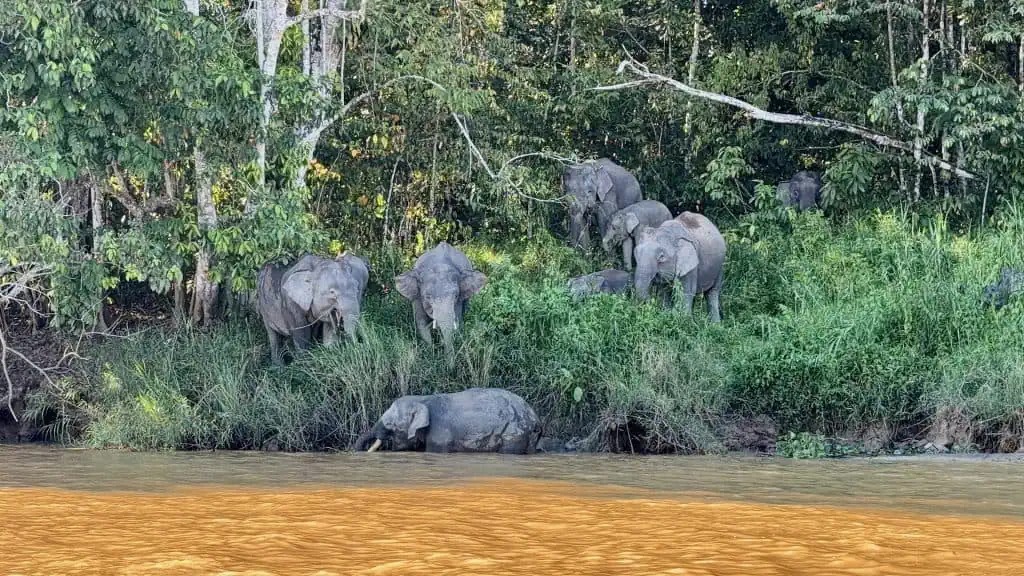
The animal
Smaller, rounder, and arguing about its own origins
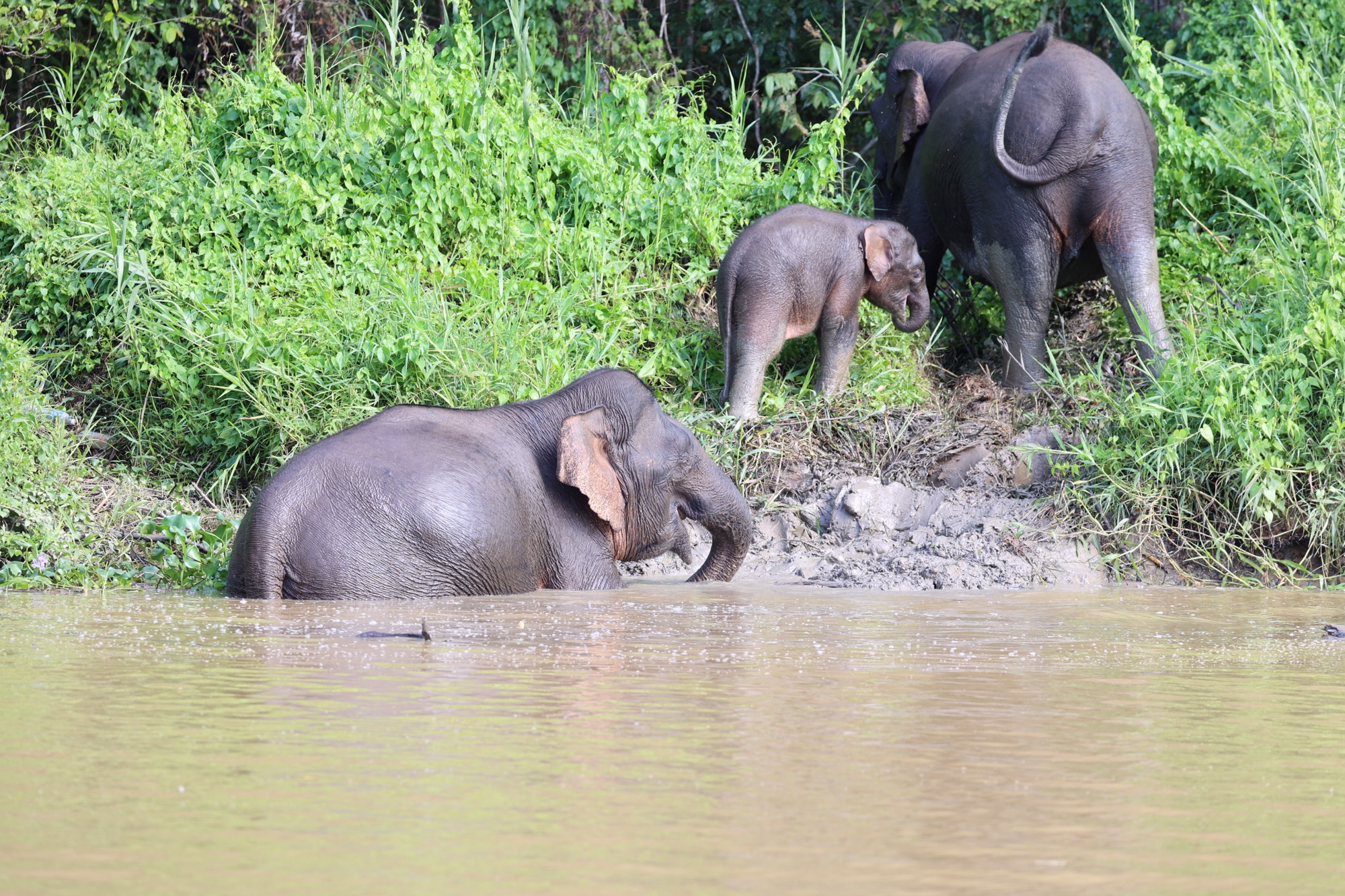
Bornean pygmy elephants stand markedly shorter than mainland Asian elephants, with rounder faces, oversized ears, and tails long enough to brush the ground — proportions that make even the adults look faintly like exaggerated drawings of themselves. They are gentler in temperament than their mainland cousins, which is a relative statement about a three-tonne animal and should be treated as such.
Where they came from is a genuinely good story: one theory long held they descended from captive elephants gifted between sultanates centuries ago, but genetic work points instead to an ancient, isolated lineage — a population separated from all other elephants for tens to hundreds of thousands of years, evolving apart ever since. Males top out around 2.5 metres, against roughly 3 on the mainland. Either way, they are found nowhere else, and there are alarmingly few: roughly a thousand remain — only about 400 of them breeding adults — almost all in Sabah, and the Bornean elephant was formally assessed as Endangered in its first standalone IUCN listing in June 2024. The herds you might meet on the Kinabatangan are a meaningful percentage of everything that exists.
Where & how sightings happen
The corridor is a road, and they're commuting
The lower Kinabatangan works for elephants the way it works for you: it's the connected route through a fragmented landscape. Herds — typically a few dozen animals, matriarch-led — travel the riverside corridor between forest patches, feeding as they go, and the river is where they become visible: drinking at the banks, bulldozing through elephant grass, occasionally swimming the channel trunk-up like the world's largest snorkellers, which no one who has seen it ever quite gets over.
The transit pattern is the whole story of your odds. A herd works through the Sukau–Bilit stretch over days, every lodge's boats feast on sightings, and then the forest swallows them for weeks. That's why our honest odds page files them under lottery tickets at roughly one-in-four across a two-night stay — and why any operator "guaranteeing" elephants is describing their marketing, not the animals. Guides share sighting intelligence daily; when elephants are in the area, your lodge will know, and cruises bend toward them.
The months that tilt the odds
Elephants are present year-round; drier months concentrate movement along the river. No month is a promise and no month is hopeless.
Best oddsFairLower, never zero
If the lottery pays out
Elephant etiquette — for boats and, rarely, roads
The guide runs the encounter. Distance, engine, angle, exit — their calls, instantly obeyed. Boatmen read elephant mood the way you read weather.
Silence is the ticket price. Engines cut, voices to whispers, no shouting a herd toward your lens. Loud boats end everyone's sighting.
Never between a mother and calf — the one line even water doesn't excuse. Guides position accordingly; don't lobby them closer.
On the Sukau road, elephants have right of way. Herds occasionally cross or occupy the road, especially at dusk. Stay in the vehicle, lights dipped, reverse if the driver says so — a car is not an argument you win.
No drones, no flash, no feeding. The standing trilogy, and around elephants each one is also a safety rule.
The harder context
A thousand elephants in a working landscape
The same fragmentation that funnels herds past your boat funnels them into plantations and villages, and human–elephant conflict is the defining threat: crop-raiding, retaliation, the occasional poisoning that makes national news, and a road network that keeps growing. The corridor you cruise is the conservation strategy — protected lots stitched along the river so herds can move without crossing farmland — and its gaps are where elephants and people collide.
Which is the honest case for tourism done properly: every boat, guide fee and lodge night prices the corridor as elephant infrastructure rather than potential plantation. You don't need to romanticise it. A herd swimming the Kinabatangan at dusk does that part unassisted.
Pygmy elephant FAQ
Asked before every cruise
What are my real chances on a standard trip?
On the classic two-night river stay: roughly one in four, better June–September, worse in the wet. A third night buys two more cruises and meaningfully better odds. Guides' shared intelligence means that when herds are in the area, your chances jump for the whole window — timing your booking is luck, but once you're there, the lodges maximise what luck delivers.
Can I book a trip specifically to see elephants?
You can book a trip that maximises the odds — longer river stay, June–September, a lodge on the active stretch, wildlife-priority guiding — and we'll build exactly that if you ask. What nobody can book is the herd's calendar. We'd rather set that expectation now than manage your disappointment on day three.
Are they dangerous?
They're wild three-tonne animals with calves to protect: calm by elephant standards, dangerous by yours. From a guided boat at proper distance the risk is negligible — that's the entire design of river viewing. The rules above exist for the rare road and lodge-ground encounters, and following them keeps "rare" as the operative word.
Why not just visit them in a sanctuary?
Because there isn't one for viewing, and that's correct: Sabah's elephant facilities handle rescue and conflict cases, not tourism. The Bornean elephant is an animal you meet on its commute or not at all — which is inconvenient, and also precisely the thing that makes the meeting worth having. Our ethics page covers why "guaranteed encounters" and "genuine wildlife" never share a brochure honestly.